
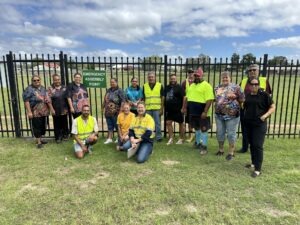
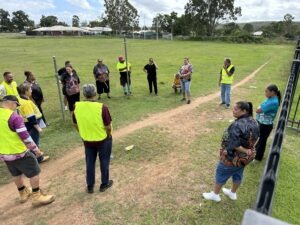
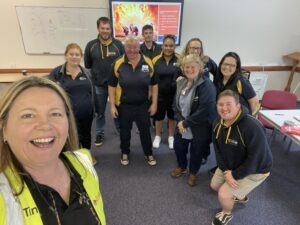
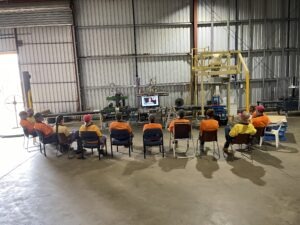
Being prepared for an emergency is an important part of workplace safety. Our fire evacuation training helps staff understand emergency procedures and their roles during an evacuation so they can respond calmly and effectively if an emergency occurs.
Our training focuses on clear procedures, staff awareness and helping businesses meet their workplace safety obligations while ensuring everyone knows what to do should an evacuation occur.
We provide fire evacuation training to businesses across the South Burnett, including Kingaroy, Murgon, Wondai, Nanango and Blackbutt, as well as the North Burnett region.
In addition to training, we also assist businesses with the design and development of evacuation diagrams and the preparation of emergency and fire management plans, helping workplaces ensure their procedures and documentation support effective emergency response.
You can learn more about our evacuation diagram services here
What Does Fire Evacuation Training Involve?
Fire evacuation training helps staff understand how to respond safely and effectively in the event of an emergency. Training typically focuses on workplace emergency procedures, staff responsibilities during an evacuation and clear communication during emergency situations.
Sessions are designed to be practical and relevant to the workplace, helping staff become familiar with evacuation procedures, alarm responses and assembly arrangements.
Overview
This training provides workers and occupants with the knowledge and practical understanding required to respond safely to a fire or emergency situation and to follow workplace evacuation procedures in accordance with site-specific emergency plans.
This training is delivered in line with:
- AS 3745 – Planning for emergencies in facilities
- Work Health and Safety Act 2011 (Qld)
- Building Fire Safety Regulation 2008 (Qld)
At the completion of this training, participants will be able to:
- Assist others to evacuate safely where appropriate
- Recognise fire and emergency hazards in the workplace
- Identify alarm types and understand required responses
- Follow workplace evacuation procedures
- Locate evacuation routes and assembly areas
- Respond appropriately to instructions from Fire Wardens
The training program covers:
- Types of workplace emergencies
- Identifying site risks and hazards
- Fire Classifications and basic fire behaviour
- General Evacuation Procedures
- First Response
- Emergency alarms and alerts
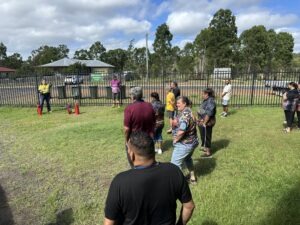
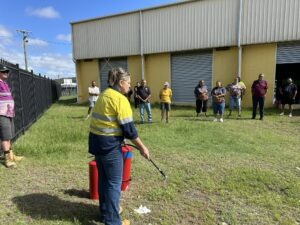
- Practical use of a fire extinguisher
- Participation in an Evacuation Fire Drill
- Do’s and don’ts during an evacuation
- The fire is out … now what!
Fire Warden Training covers all of the above, including:
- Emergency Planning Committee (EPC) roles and responsibilities
- Emergency Control Organisation (ECO) roles and responsibilities
- Emergency Systems and Equipment
- Coordination during an evacuation
- Post-evacuation procedures and prevention considerations
Training is delivered:
- With opportunities for participant questions
- Face-to-face in the workplace
- Using site-specific evacuation diagrams
- Through discussion, demonstration and practical walk-throughs
This is non-accredited training. Participant understanding is confirmed through:
- Active participation
- Observation during walk-throughs
- Verbal questioning and discussion
Emergency Planning and Workplace Preparedness
Workplaces should have clear procedures in place to help staff respond appropriately in the event of an emergency. Emergency preparedness typically involves a combination of staff awareness, clear procedures and information that helps occupants understand evacuation routes and assembly areas.
Fire evacuation training helps staff become familiar with workplace emergency procedures and understand what actions may be required if an evacuation occurs.
In addition to training, workplaces may also use evacuation diagrams to provide visual guidance showing exits, fire safety equipment and assembly areas within a building. These diagrams support emergency preparedness by helping occupants quickly identify evacuation routes.
Some workplaces may also develop an emergency and/or fire management plan that outlines procedures, responsibilities and communication arrangements during an emergency.
We can assist and provide services in all of the above